Powerful Ways to Get Ahead of Challenging Student Behavior Blog Series: Part 1
There is something about October that can test even the most enthusiastic educators.
The back-to-school excitement has faded, the challenges are piling up, and suddenly October feels like the longest month of the year.
Years ago, Tiffany was commiserating with a group of staff members about the seemingly endless challenges of October when she jokingly referred to it as Sucktober.
The name stuck.
Unfortunately, so did the reality behind it.
And if October is feeling especially hard right now, you're in good company.
There's a reason for that.
There's Actually Research Behind Sucktober
That’s right, there is research that helps explain why October can feel so difficult.
Ellen Moir's work on the Phases of First-Year Teaching identifies a period of disillusionment that often begins in October ↓
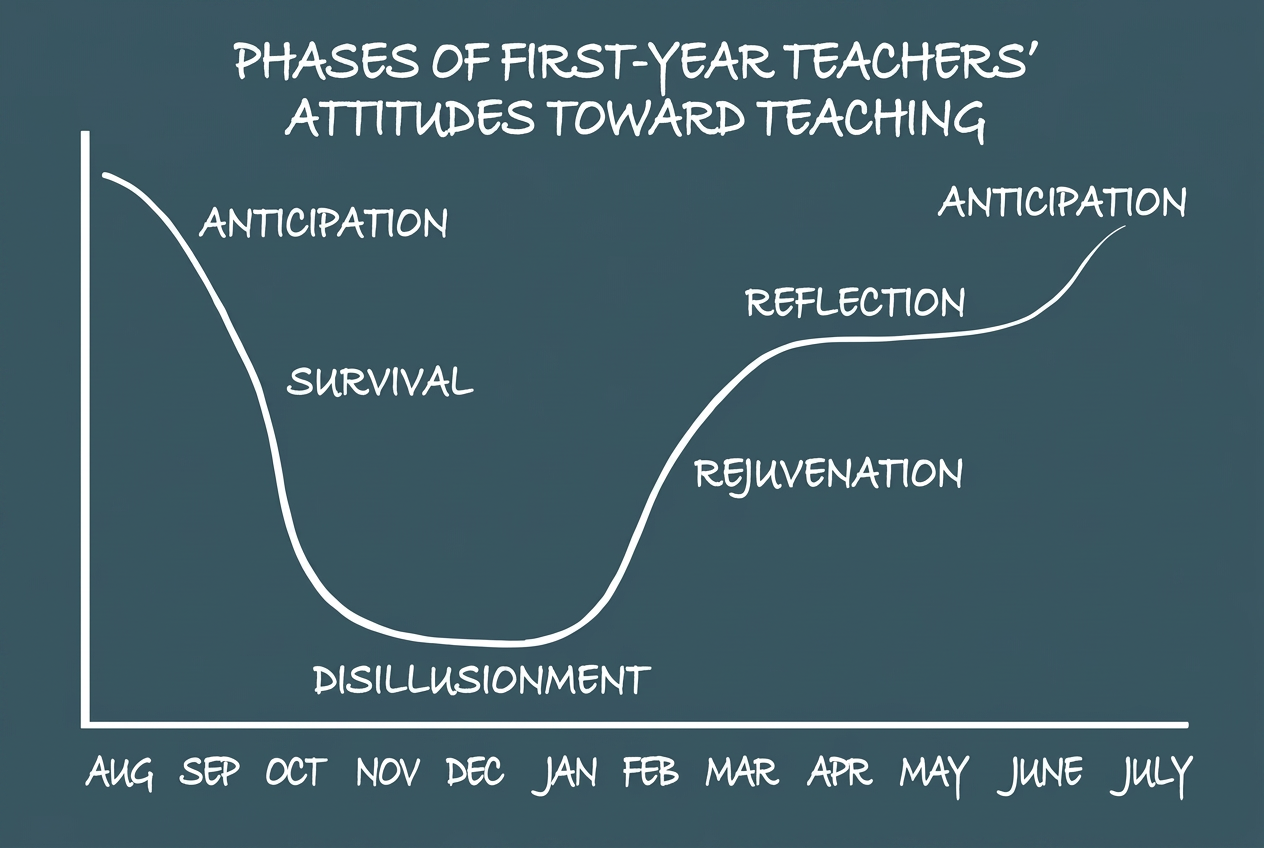
Source: Moir, E. (1990). Phases of First-Year Teaching. California New Teacher Project, California Department of Education. Read the original article.
While Moir's research focuses on first-year teachers, we know that the October slump isn't limited to new educators.
Educators at every stage of their careers can experience it.
And when we think about everything happening in schools this time of year, it's not hard to understand why.
Why October Is So Hard
Think back to the beginning of the school year.
The excitement of returning to school, the fresh start, the new faces, and all the possibilities ahead.
But by October, the honeymoon is over.
We're still establishing routines and systems.
We're still getting to know our students and their families.
And they're still getting to know us.
We're learning what works, what doesn't, and what our students need to be successful.
All that uncertainty can contribute to challenging behaviors as students adjust to new relationships, expectations, and environments.
And there's still so much of the school year ahead of us.
And Then There's the Data
As if all of that weren't enough, October is also when we're beginning to see the results of our fall assessments.
We're getting a clearer picture of where our students are academically and just how much work we have ahead of us.
Some of our students are doing incredibly well, and we're thinking about how to challenge them and keep them growing.
Others have significant gaps in their learning.
Some are several years behind grade level, and we're faced with the challenge of helping them make two or three years of academic growth in just one year.
That's an enormous responsibility.
And we feel it deeply because we care so much about our students and their success.
And that's on top of lesson planning, grading, meetings, emails, caregiver communication, and all the other competing demands of the school day.
And then someone inevitably asks, "But what are you doing for self-care?"
How is it that something that's supposed to help us feel better has now become one more thing we feel guilty about not doing?
October Doesn't Define the Year
But here's something important to remember.
We shouldn't judge our school culture, our students, or ourselves based on what we're experiencing in October.
Just because October is challenging doesn't mean the entire school year will be.
Collective Efficacy: The Way Forward
Knowing that October won't last forever is reassuring.
But it doesn't necessarily make October any easier.
So what can help?
Collective efficacy.
Collective efficacy is the shared belief that together, we are effective and can make a difference.
John Hattie's Visible Learning research identifies collective teacher efficacy as one of the strongest influences on student achievement, with a reported effect size of 1.34.
At this point in the year, it's hard to feel connected when we're still building relationships.
And it's hard to feel effective when we're still figuring out what works.
And it's not as simple as just believing we can be more effective.
We need the tools and strategies that allow us to actually be more effective.
And that's exactly what we're working to do at Connecting Through Conversation, and what this series is designed to support.
Over the next several weeks, we'll be sharing practical strategies to help us better understand, prevent, and respond to challenging behavior so our students can spend less time struggling and more time learning and growing.
A Little Sucktober Pick-Me-Up!
But for now, it's still Sucktober!
And while we can't wave a magic wand and make October easier, we can offer a little Sucktober pick-me-up.
It turns out there are a whole lot of businesses that appreciate educators, and they're willing to show it with some pretty great discounts!
We rounded up some of our favorites, just for you:
A Little Something for Yourself
Discounts and eligibility requirements vary. Some offers require educator verification through ID.me or SheerID. Visit each retailer for current terms and exclusions.
Everyday Perks
Who Doesn’t Love Free Books?
These aren't all educator-exclusive offers, but we think they're worth sharing!
Free Admission and Experiences
Who doesn't love a free museum visit?
Some museums and attractions offer complimentary admission or special benefits for educators.
Here are a few we found:
Don't Forget Your Local Bookstores!
Independent bookstores often have educator benefits, too.
Here are a few offering discounts:
And don't forget to ask locally!
Your favorite bookstore, museum, coffee shop, or restaurant might have an educator discount you don't even know about.

Want Even More?
Check out the WeAreTeachers educator discount directory for even more possibilities:
Discover even more ways to save with the WeAreTeachers educator discount directory.
Discounts and eligibility requirements vary. Some offers require free educator verification, and certain benefits are limited by location or type of school.
Coming Up Next: Getting Ahead of Challenging Behavior
Over the next several weeks, we'll share practical strategies for understanding why behaviors happen, making a plan to get ahead of them, and growing the positive behaviors we want to see more often.
Keep an eye on your inbox for the next installment of Getting Ahead of Challenging Behavior!
Want to go deeper?
We recently hosted our training Escape the Behavior Trap, where we break down why traditional responses don’t work - and what to do instead.